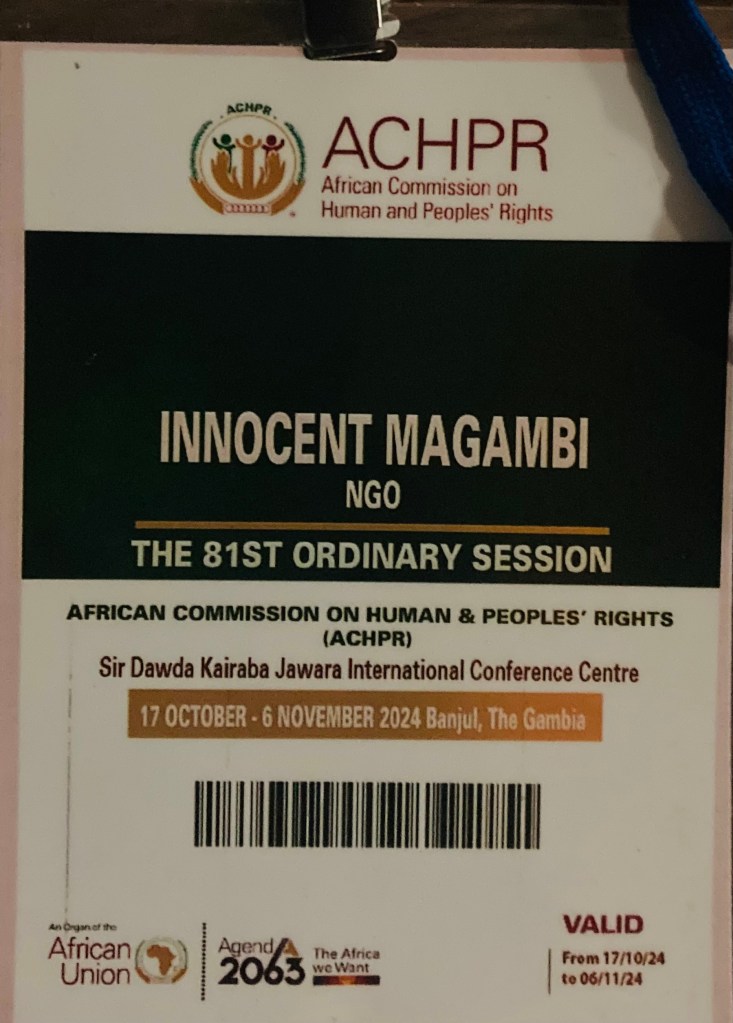
Two days ago, on October 17th, I reported for the opening ceremony of the 81st Ordinary Session of the African Commission on Human and Peoples’ Rights in Banjul, Gambia. As delegates from across Africa; government officials, civil society organizations, media, and international agencies gathered to collect their name tags, what should have been a simple process quickly descended into chaos. Name tags were mixed up, misplaced, and for some, it took hours to locate them. Frustration and confusion spread among the crowd, with blame and anger boiling beneath the surface, even among the smartly dressed and well-educated attendees.
As I stepped back from the chaos after 30 minutes, I saw a plain reflection of our continent. Just as this simple task devolved into confusion, so too does Africa’s immense potential often fall into disorder. Africa is a continent rich in natural resources; abundant fresh water, fertile land, and precious minerals. Yet, in 2023, 640 million Africans still lack access to electricity, representing 46% of the population. Food insecurity remains rampant, with governments choosing to receive aid from war-torn Ukraine rather than sourcing surplus food from neighboring countries.
The irony runs even deeper. We create wars among ourselves, driven by the desire to cling to power. In doing so, we buy arms from foreign nations, we kill our own while taking loans that our people, not our leaders, will have to repay. The true cost of power is always paid by the powerless. We present ourselves as polished and eloquent on the world stage, but our actions too often fall short when it comes to real progress for our citizens.
This reflection is not just about resources or leadership, it is about how we treat one another. As Africans, we still show reverence to foreigners while undervaluing our own people. For instance, I entered Gambia with my Italian passport with no visa requirements, but my colleague from Malawi, despite all online information suggesting otherwise, had to pay $120 for a visa.
In the end, I chose to remain in the chaos and find my name tag, knowing that taking part in the solution, no matter how small, was better than blaming others. Africa’s challenges are vast, but each of us plays a role in the solution. If we want real change, we must all commit, big or small, to turning frustration into action and chaos into progress. Only then will we truly unlock the potential of our continent.


 Thriving Through Trials
Leave a reply to daeilts Cancel reply