On April 30th, 2024, I started my first driving class in Italy. It was a big step, not because I didn’t know how to drive, but because I had to begin from zero. Despite having driven for over 15 years in Malawi and holding a license there, the Italian government didn’t recognize it. A friend kindly sent over $800 to help cover the cost, and that’s when my emotional and deeply personal journey began.
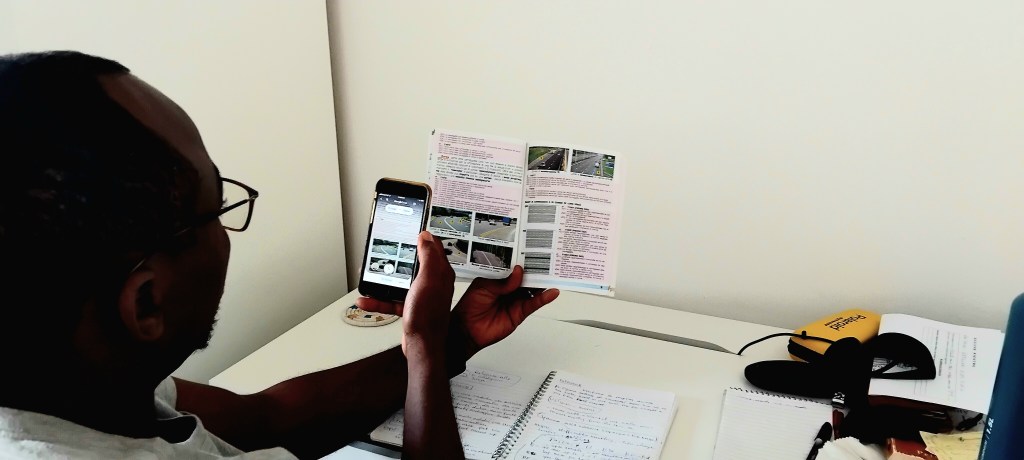
All the lessons were in Italian. I understood maybe 15–20% of what was being taught, but I sat there, focused, taking notes. Eventually, one of my sons showed me how to use Google Lens to translate the textbook, one hand holding the phone, the other the book, and somehow still managing to take notes. Since English wasn’t an option for the theory exam, I chose French, a language I hadn’t spoken in 21 years.
Still, I pushed through. For me, learning to drive in Italy was about more than just getting from point A to B. It meant no longer relying on my nearly 80-year-old father-in-law to take my wife to her medical appointments or the kids to their activities. It meant taking one step closer to independence in a place where I often feel like a stranger. It meant integration, dignity and a small piece of control in a life that felt like it had been stripped of it.
The theory exam came on November 29th. It’s done on a computer: 30 true-or-false questions randomly selected from a 371-page manual, all within a 20-minute time limit. To pass, you need at least 27 correct answers. The night before, sleep was impossible. I kept asking myself: What if I fail? What if all this effort isn’t enough? But when they called out the names of those who passed, and mine was on the list, 29 out of 30, I was in shock. I felt like a 200kg load had fallen from my shoulders. I was shaking, overwhelmed, and deeply thankful.
Then came the practical lessons. To my surprise, the very first class included how to sit properly, adjust the mirrors, and even how to exit the car after parking, details that seemed almost absurd after 15 years of driving. My instructor and I struggled with communication, he knew only a few English words, and I was piecing together basic Italian, but we found a rhythm.
The hardest part, though, was what happened every single time we started moving. Just a few minutes in, my instincts would take over. Without realizing it, I’d slip back into the habits built from 15 years of driving—habits that didn’t fit the strict Italian system. My instructor’s response was always immediate and intense. His frustration erupted in loud corrections, animated gestures, and rapid Italian and swear words, I didn’t understand everything he said, but I understood enough to feel small, and out of place. Every lesson carried this same sting, but I endured.
My first practical exam was in February. I was nervous. The examiner immediately picked up on my broken Italian. He looked at my ID and asked, almost incredulously, how an Italian citizen couldn’t speak the language. I smiled awkwardly, I didn’t have the language to explain, and he wanted an answer. The pressure was high before we even got on the road.
During the test, things seemed to go well until I was told I had failed. I hadn’t stopped at two stop signs. I couldn’t believe it. I cried. I remembered the signs clearly, but in the moment, I had slipped again into old habits, driving like I always had, not like a learner under examination. I had forgotten that I wasn’t being tested on how well I could drive, but on how carefully I followed every single rule.
Today, I retook the exam. This time, the examiner was gentler. He noticed my nerves and gave me a moment to calm down before we began. I reminded myself to drive like a student. Step by step. And then I was on the highway. When I parked at the end, he said, “I’ll give you the license, but you cannot have an Italian wife and citizenship without knowing the language.”
I focused on the first part. I smiled wide, shook his hand, and received my license. I was so overwhelmed, I almost forgot to sign for it. My heart felt lighter. My body felt freer. My gratitude to God, deeper than ever.
But as that gratitude continues to flow, I can’t ignore the cost people pay when they are uprooted, whether by displacement or migration. It’s heavy. It reaches deep. It affects everything: your identity, your confidence, your sense of belonging. So, the next time you meet someone starting over in your community, be kind. Be patient. Offer a little care. You might be helping lighten a burden they carry every single day.


 Thriving Through Trials
Leave a reply to cool4physics Cancel reply